American Drivers are Olympians
With the Olympics approaching, Americans will once again celebrate athletes who represent the United States on the world's biggest stage. We understand what that means. Names like Michael Phelps, Carl Lewis, Simone Biles, Apolo Ohno, and Lindsey Vonn carry weight not just because of medals, but because they competed internationally, under enormous pressure, as representatives of their homeland.
But there is a group of American athletes competing on a global stage that most Americans still don't know how to see—racing drivers.
A concept we need to reframe: American racing drivers as Olympians.
Colton Herta, Jak Crawford, and Logan Sargeant are Olympians. Not because racing will ever be an Olympic sport, but because the Formula Series driver pathway mirrors the Olympic experience in every meaningful way: insane demands, stakes, and the absolute highest level of international competition. Racing drivers train like Olympians, operate at the thinnest margins of human performance. competing against the best drivers in the world across multiple continents under some of the most extreme conditions in all of sport. They represent their nation, whether we recognize it or not. And too often, we don't.
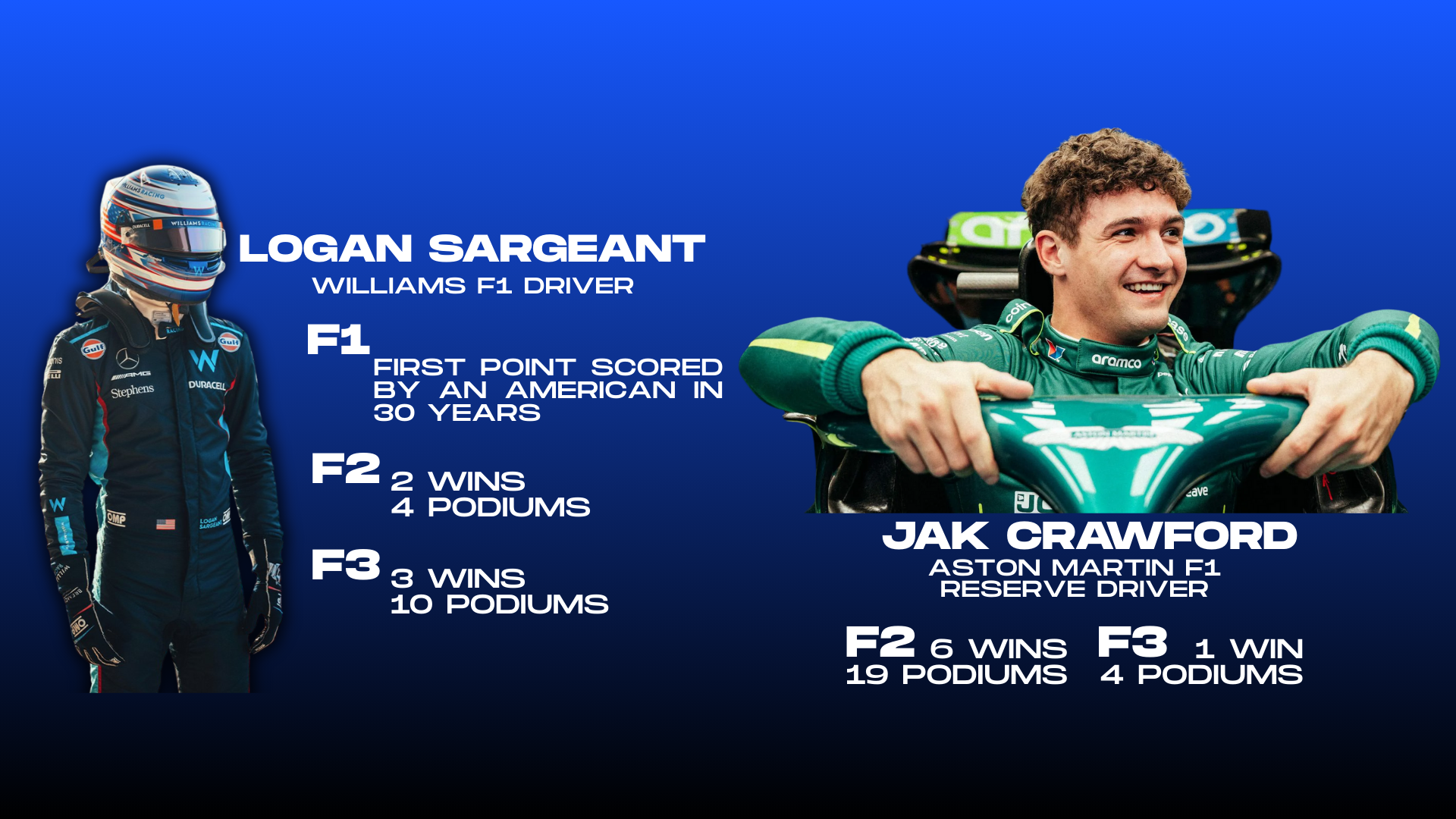
For two seasons, Logan Sargeant competed in Formula One—the highest level of motor racing on the planet. Racing at over 200 miles per hour at the most iconic circuits on the planet, against the world's most elite drivers. Yet most Americans were barely aware that there was an American on the Formula One grid. This isn't about assigning blame. It's about recognizing a missed opportunity. Sargeant's presence in Formula One should have been a cultural moment. Instead, it passed quietly, unnoticed by the country he represented. That gap reveals something larger about how Americans understand—and fail to understand—global motorsport.
The pattern continues.
Jak Crawford won multiple Formula 2 races this season and contended for the championship, positioning himself among the most promising young drivers in the world. And yet, outside of dedicated racing circles, most Americans have never heard his name. This is the opportunity gap. American success in international racing does not automatically translate into national awareness. Unlike traditional American sports, racing does not follow a familiar developmental pipeline. There are no college rivalries, no regional fan bases to anchor the narrative. Without intentional storytelling, these athletes remain invisible.
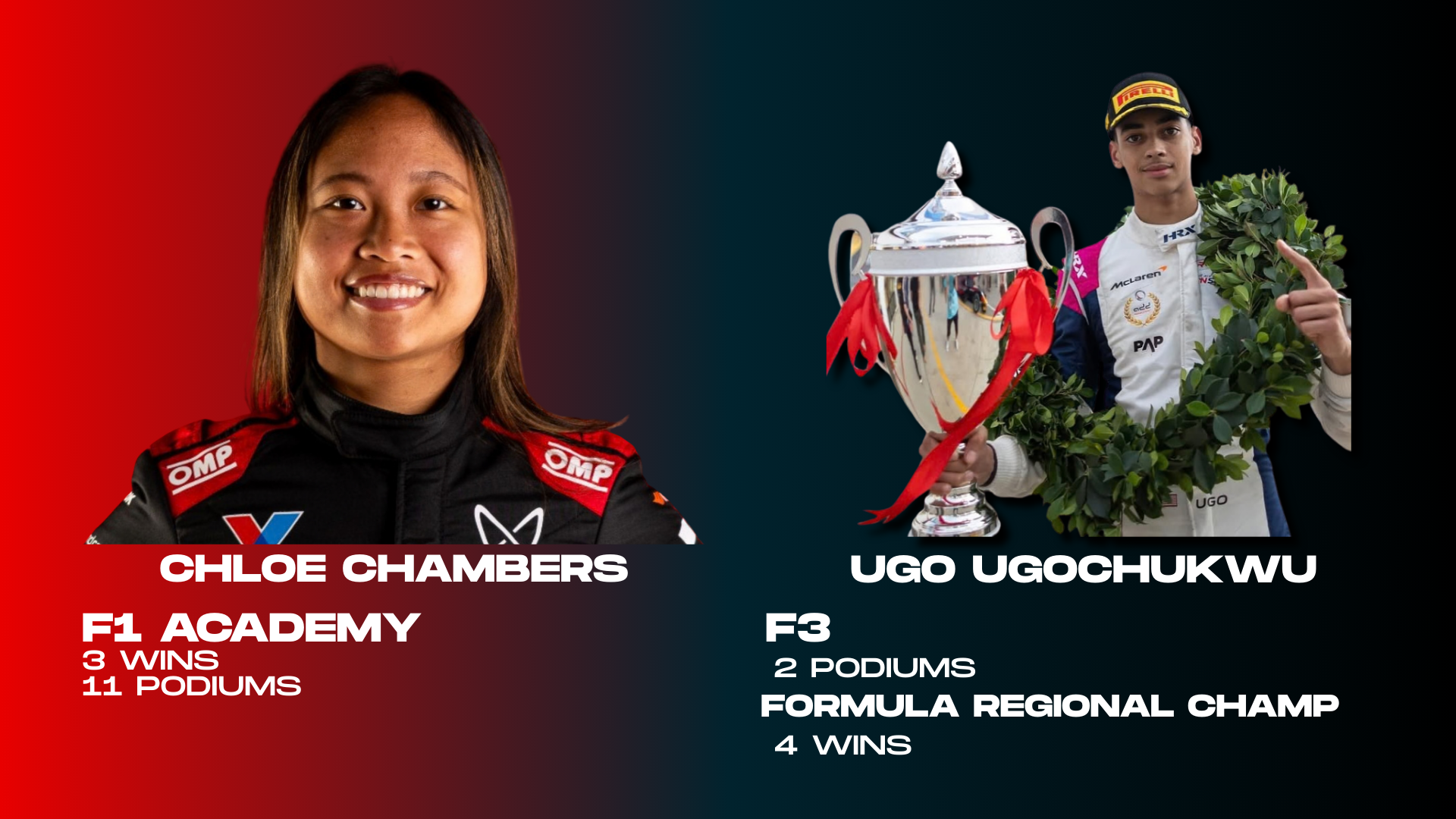
A few promising young American drivers in the feeder formula series include Chloe Chambers, a driver in the female F1 Academy, and Ugo Ugochukwu, who is expected to compete in F3 again this season after recently winning the Formula Regional (Oceania) championship. Supporting these young American drivers as they climb the ladder to F1 is crucial for their development. The more fans they attract, the more visibility they gain, which leads to increased advertising revenue.
The Olympics show us that Americans don't need to understand a sport to care deeply about its athletes fully. Most Americans cannot explain the technical nuances of figure skating, Alpine skiing, or track & Field, but they understand excellence, pressure, sacrifice, and representation. They know what it means to compete for the United States. That same cultural recognition must extend to racing drivers.
The next American Formula One driver cannot simply arrive on the grid and hope awareness follows. They must be ingrained in the culture. They must be visible beyond the racetrack—appearing on popular podcasts, participating in brand partnerships, showing up in mainstream media, and being introduced to Americans not just as drivers, but as elite competitors representing their country on a global stage. This is not about hype; it's a proper framing of the reality.
Racing drivers are already operating at Olympic-level performance. What's missing is the cultural translation—the bridge that helps Americans understand what they are seeing. As the Olympics remind us what global competition looks like, it's time to expand our definition of who an American Olympian can be; Some of them wear fire suits and drive 200 miles per hour.