Hall-The Godfather of Aerodynamics
The "formula" in Formula 1 is derived from a Latin word meaning a fixed form, rule, or prescribed method, implying freedom within defined boundaries. From the outset, those boundaries were relatively simple: engine size limits, weight requirements, fuel rules, and safety standards. As the sport matured, those guardrails multiplied, evolving into a highly complex system with millions of moving parts. At its core, the "formula" functions as a pressure system, continually pushing engineering creativity to the very edge of what is possible.
That pressure becomes most visible when regulations change. Rather than delivering immediate clarity, new rules typically introduce a period of imbalance, and 2026 is shaping up to be another example. The pattern is familiar. A small number of teams uncover an early advantage, the rest of the grid responds in pursuit, and only later does competitive equilibrium emerge. The Brawn double diffuser in 2009 remains a clear illustration of this process, a single interpretation that created a gap large enough to decide a championship. This phase of instability is not an accident but a necessary middle ground between written rules and practical limits, where engineers test the rules before the sport is forced to define them more precisely.
Long before aerodynamics became a central performance pillar in Formula 1, teams were already searching for ways to bend physics in their favor. Jim Hall understood this instinctively, well ahead of the sport's broader thinking. If Adrian Newey is the "King of Aero", then Hall stands as the Godfather, shaping the philosophy before it ever became a proper specialization.
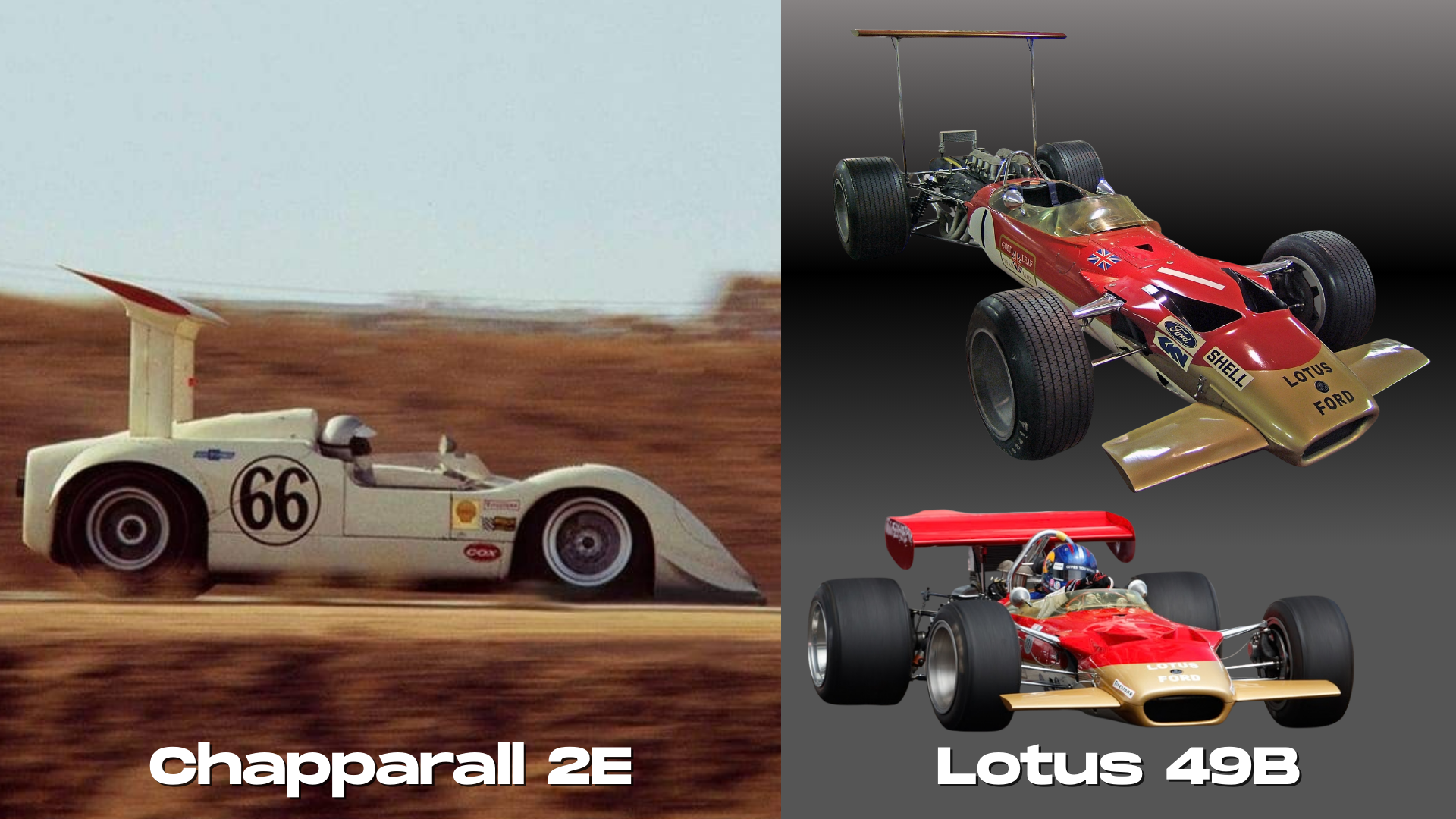
Hall's work with mounted wings on his Chaparral 2E didn't just introduce new hardware; it shifted the mindset surrounding racing. He demonstrated that downforce could be engineered and controlled to a degree that fundamentally transformed performance. Hall's influence is still evident today, as modern Formula 1 continues to reinvent the core ideas he explored half a century ago, particularly in manipulating airflow dynamics.
That same way of thinking would resurface in even more radical form with Hall's next breakthrough. His Chaparral 2J, better known as the "sucker car," laid the intellectual groundwork for what would later become ground-effect floors. The insight was deceptively straightforward. By using mechanical fans to pull the car, Hall increased downforce and drivability regardless of speed. In doing so, he expanded the aerodynamic conversation beyond wings alone and reframed the car's floor as an active participant in performance. That shift permanently altered how engineers approached vehicle design.
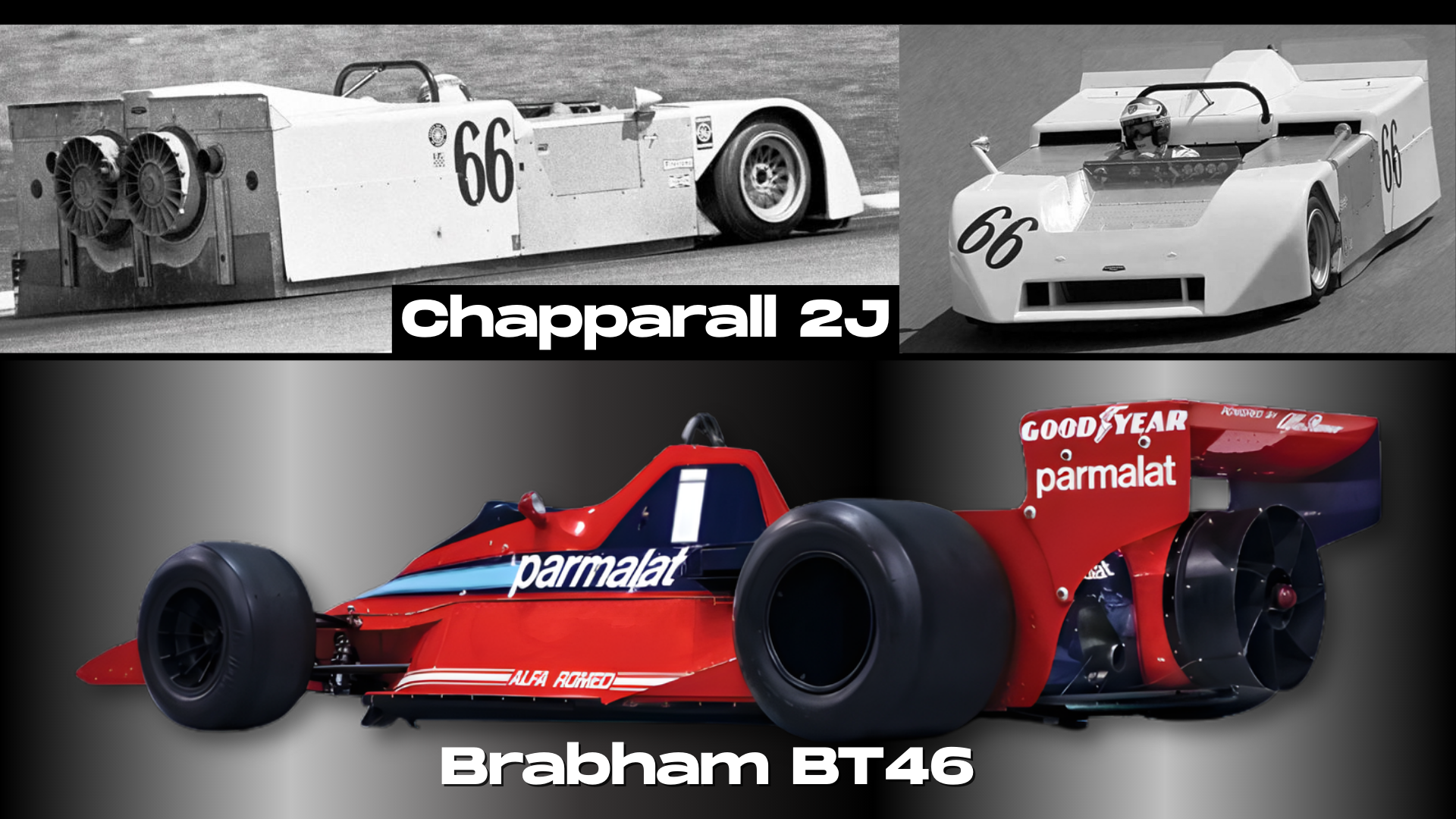
Although Jim Hall made 11 Formula 1 starts in the early 1960s, all with non-works Lotus teams, and a full season with BRP running a Lotus chassis, his most enduring impact came elsewhere. While there is no clear record of Hall directly handing solutions to Colin Chapman, the overlap in their thinking is unmistakable. They were operating on parallel tracks of genius. Hall truly left his mark in the Americas through the Can-Am Series, where technical freedom allowed his ideas to breathe fully. Hall did not give Chapman answers. He changed the questions themselves, while Chapman's brilliance lay in translating those questions into solutions that could survive within the constraints of Formula 1.
In the end, the formula has never been about restricting creativity. It exists to expose it. Engineers like Jim Hall showed that progress does not come from answers alone, but from asking better questions, and Formula 1 just cracked open a new book full of them.