F1: More Than Just a Sport—A Lifestyle Brand.
What makes something cool?
What makes something resonate with culture?
Six years ago, Formula 1 was still somewhat of an unknown in the United States, not literally, of course, but in the mainstream. Formula 1 had been racing in America for decades. The sport has a long history in the United States: legendary drivers, iconic grand prix venues, and a devoted American fanbase. But for most Americans, Formula 1 existed on the fringe of sports culture. It felt foreign; complicated, expensive. It was something that happened on Sunday mornings at inconvenient hours, on a television network many people didn't regularly watch.
Then, seemingly overnight, Formula 1 became impossible to ignore. It became clear that something much bigger had happened. Formula 1 did not simply become more popular in America. It became culturally fluent. It was everywhere; it appeared on Netflix and took over social media. More races appeared in American cities, and eventually, the brand appeared in major retail. Today, fans can find F1 merchandise at various retail levels, from budget-friendly items to high-end products—a unique concept for sports merchandise.
F1 was due for a breakout; for a sport that has been around for 70+ years, its popularity has had its peaks and valleys in the U.S. The 60s and 70s were peak; the late 80s began a dip; the 90s were nearly nonexistent on home soil. There was a slight increase with the return of the U.S. GP to Indy in the early 2000s, and then it seemed to fade off into the distance. Even with the return of the U.S. GP in the 2010s, it still didn't quite have the cultural relevance as one would expect.
It is impossible to discuss the growth of Formula 1 in the United States without mentioning Drive to Survive. Add in a global pandemic driving demand for new content, and the Netflix series captured millions of Americans for a sport they might otherwise never have watched. DTS humanized the sport. It turned drivers into characters, rivalries into storylines, and races into episodes of an ongoing drama. For many new fans, Formula 1 was not initially about tire strategy or aerodynamics; It was about personalities. Netflix could only open the door; Formula 1 itself had to give people a reason to stay. The sport had finally become accessible. The drivers became recognizable, and the teams developed identities. Races have turned into highly coveted events, tapping into celebrity and culture in a way that few other U.S. sports have.
Popularity boom drives commercialization.
Traditionally, sports merchandise has been fairly straightforward, existing within the same ecosystem as the sport. Formula 1 has increasingly moved away from that traditional ecosystem. You no longer have to visit a motorsports website or a team store to encounter F1 merchandise. You can literally find it anywhere.
You can find it at Abercrombie & Fitch, Hollister, American Eagle, PacSun, Old Navy, Target, The GAP, and H&M; kids' brands like LEGO and Disney; luxury brands like Tag Heuer, Neiman Marcus, and Saks Fifth Avenue; and even home decor brands like Pottery Barn. These retailers don't all sell the same products or target the same customers, yet they have all found a way to incorporate Formula 1 into their offerings. This diversity of retail presence makes the transformation particularly intriguing.
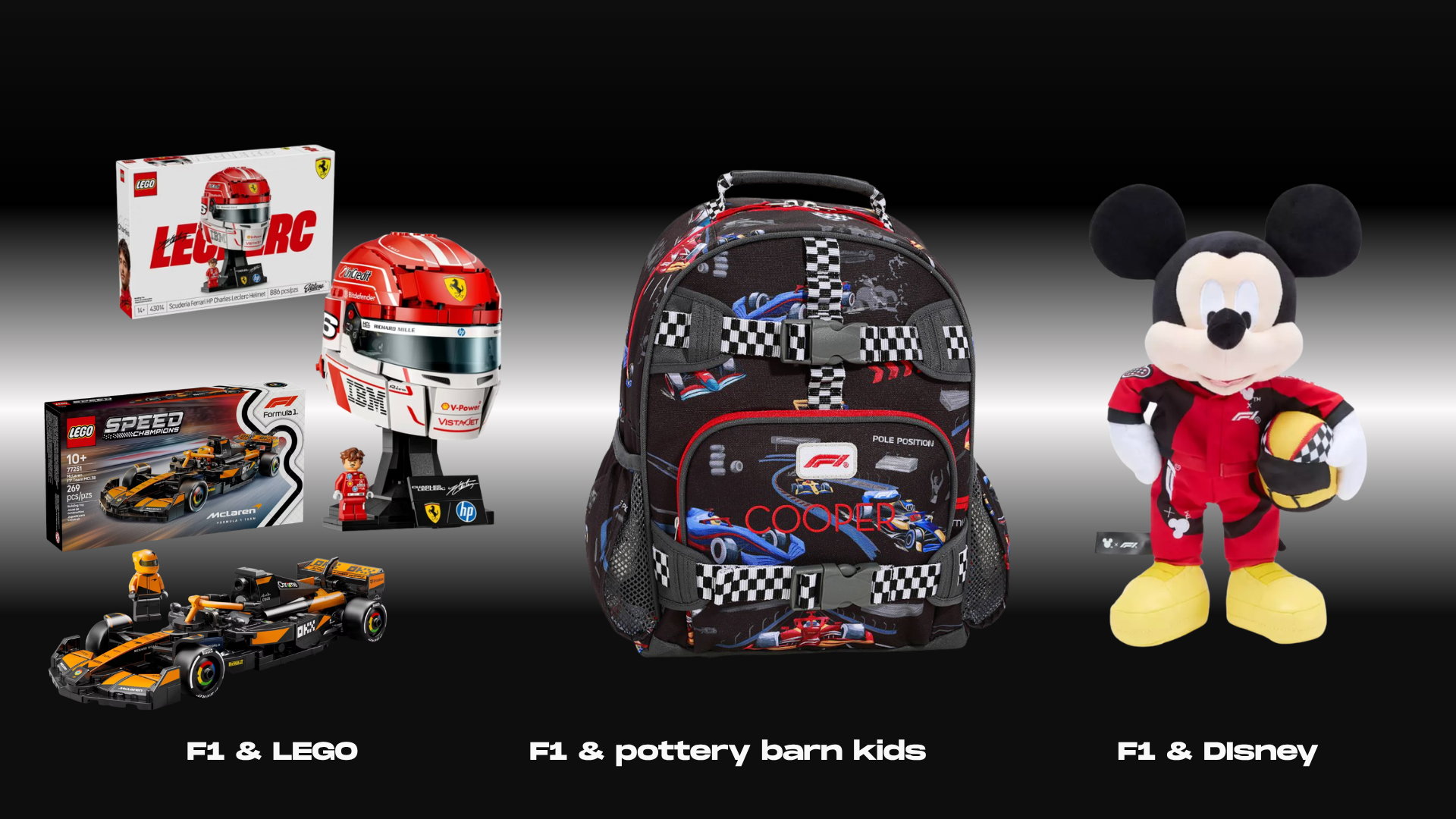
Formula 1 Is a Blank Canvas
These brands are not marketing Formula 1 to a single demographic. Instead, they present their own interpretations of the sport. Abercrombie, Hollister, PacSun, American Eagle, and H&M can portray F1 as youthful and trendy, while Old Navy and Target can make it accessible to the average consumer. Pottery Barn transforms racing imagery into lifestyle and home products, whereas TAG Heuer, Neiman Marcus, and Saks integrate Formula 1 into the luxury market. The same sport can exist across these varied spaces simultaneously, which is quite unusual.
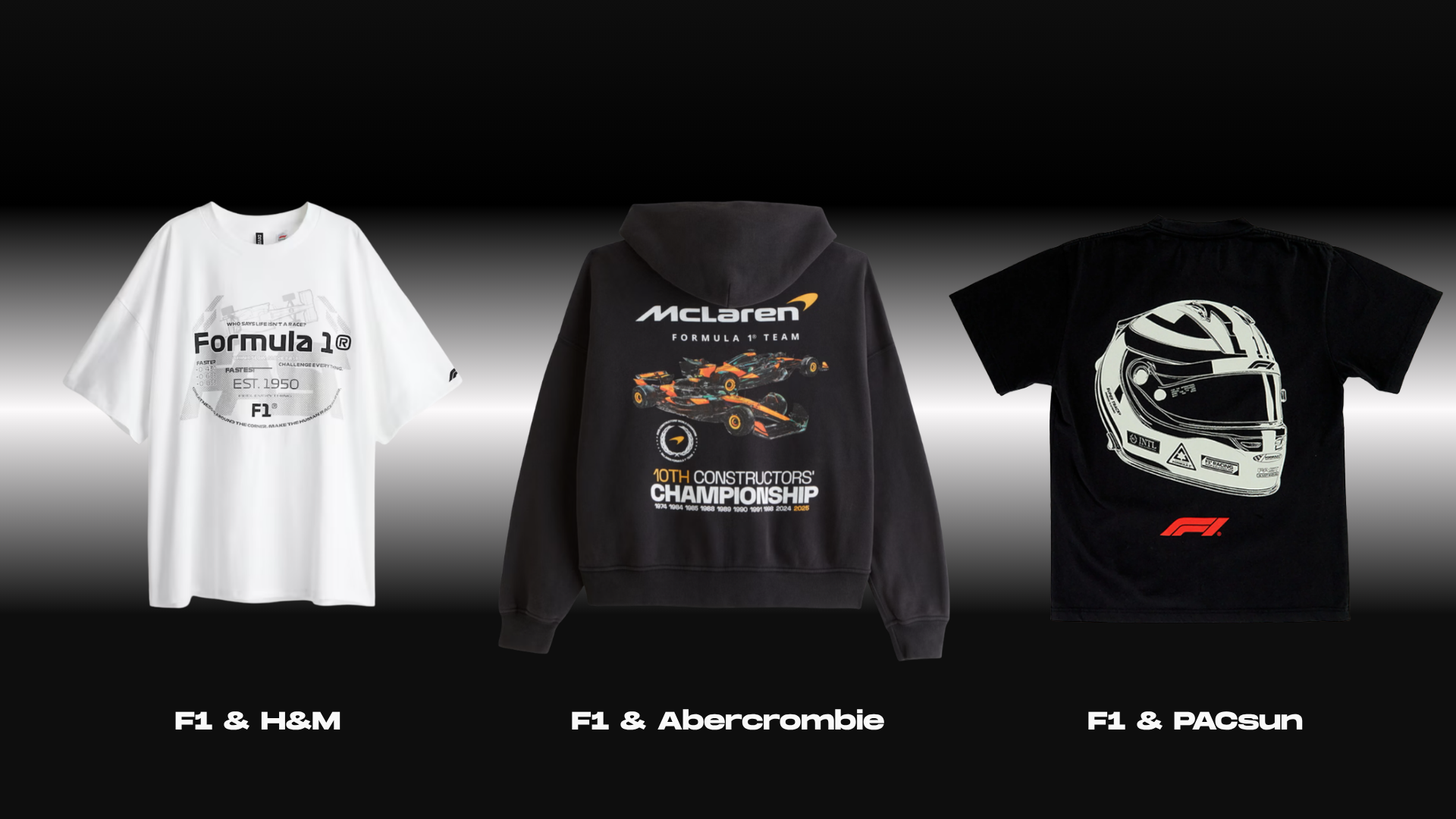
Perhaps one of the reasons Formula 1 has been so easy to commercialize is that it has never been just one thing. Formula 1 is more than racing and, increasingly, an entertainment brand. That gives brands an incredible amount of freedom inside their own ecosystems. They are all selling the same sport, but they are not necessarily selling the same idea of the sport. This is one of Formula 1's greatest strengths.
The Difference Between Popular and Culturally Relevant
There is a difference between a sport being popular and a sport becoming culturally relevant. A sport can have huge television ratings and still exist primarily within its own world. Formula 1 seems to be doing something different. It is becoming a cultural focal point. You do not necessarily need to watch every race to recognize the imagery of Formula 1. You may not know the current championship standings, but you know what a Ferrari Formula 1 car looks like. You may never have attended a Grand Prix, but you understand the visual cues of speed, luxury, and competition associated with one. That is cultural relevance. The sport has become recognizable even to people who are not necessarily fans, and that creates enormous commercial potential.
Formula 1 used to require you to find Formula 1. You had to know where to watch it. You had to seek it out. Now, Formula 1 is finding you. The races are still the product. But the culture surrounding Formula 1 has become almost infinitely expandable. Formula 1 did not simply convince more people to watch racing. It convinced the culture that racing is a universal language and could be part of almost anything.