Every culture, whether it's a country, a family, or a sport, has its own unspoken rules. When we travel, we instinctively adjust our behavior; we might be more reserved at a historic landmark or remove our shoes when entering someone's home. As guests, we typically listen more than we speak. Not because we are explicitly told to, but because respect is how we are welcomed. Formula 1 operates in a similar manner. While it's a global spectacle, it's also a deeply protected culture, guarded by fans who have invested decades of attention, loyalty, and emotion. When someone, especially a celebrity, enters this world, they are judged not by who they are, but by how they engage with it. The Martin Brundle grid walk is a moment when guests can subtly convey, "I understand where I am, and I respect what this means to Formula 1."
Few individuals in modern Formula 1 exist outside the machinery, the data, and the corporate noise. Even fewer enjoy universal respect from fans across generations. Martin Brundle is one of those rare figures, and that’s why he matters.
The Monaco Grand Prix is always filled with celebrities—actors, musicians, influencers, billionaires—many of whom are there to be seen rather than to watch the races. This year was no exception, especially with Lewis Hamilton finishing second and his personal life drawing unusual attention. Kim Kardashian was spotted in the Ferrari garage, on the grid, and near the podium. It was the first time she and Hamilton publicly presented themselves as a couple on the grid, and predictably, the F1 fanbase reacted with caution. This reaction wasn't specifically against her, but rather a reflection of how Formula 1 values an earned presence.
"I can do that, because I did."
So, what is the Brundle Test?
There is no one above Martin Brundle on the F1 grid; his credentials have credentials, and he's an all-access figure. Royalty, wealth, top athletes, and world-famous stars—all are fair game for Martin.
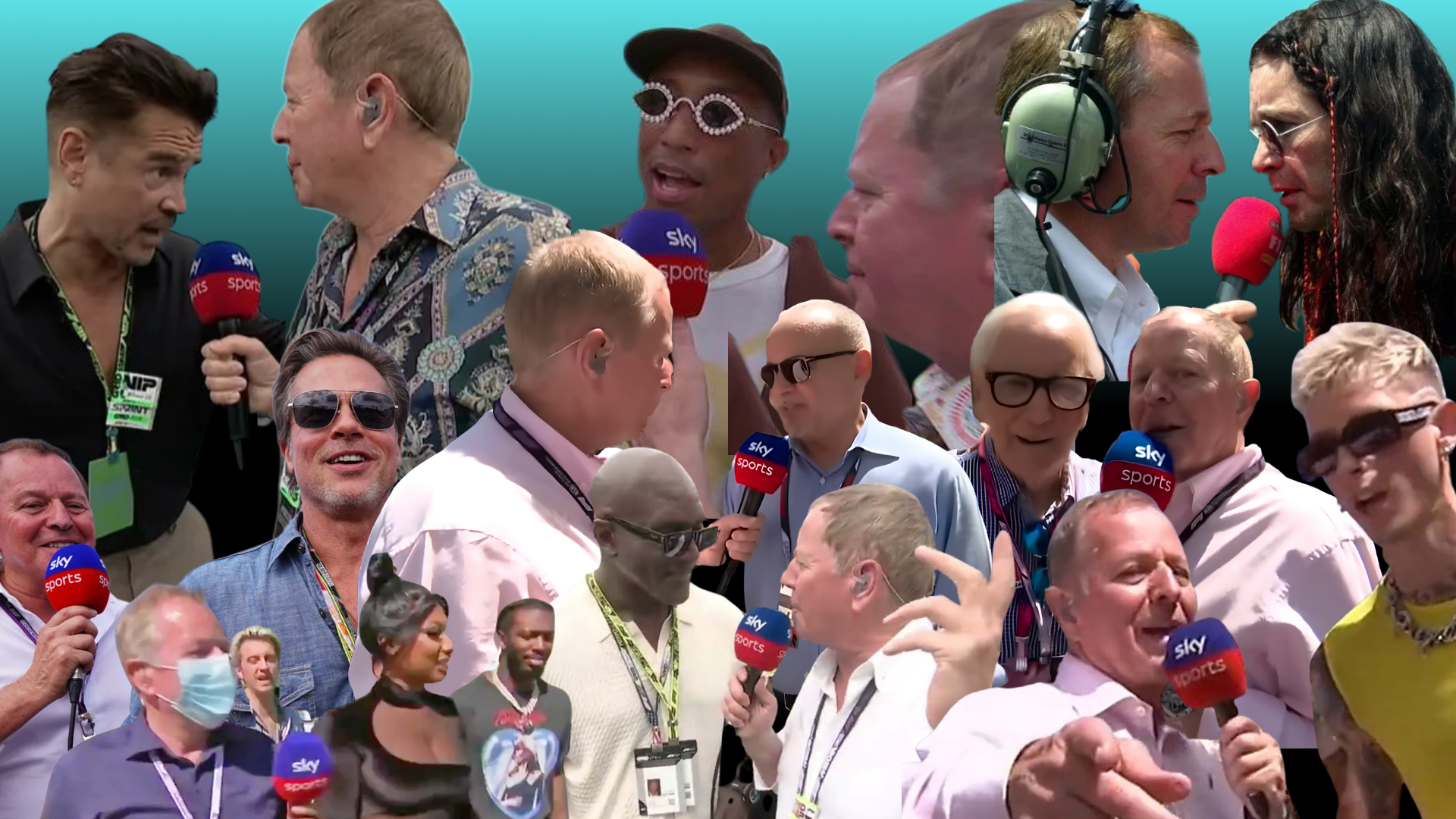
Every race weekend, Martin Brundle walks the grid with a microphone in hand as part of a highly regarded segment. It's unscripted, occasionally awkward, chaotic—and completely authentic. That’s why fans love it. One of the unspoken rules of Formula 1 fandom is to respect Martin Brundle; this gesture signals that you respect the sport. Celebrities who stop to chat with him, even for a moment, often win goodwill. In contrast, those who brush past him or decline an interview tend to face backlash—fair or not. It's not about arrogance; it’s about awareness.
Brundle isn’t just a broadcaster; he's a bridge to the inner workings and rich history of a beloved sport. As a former driver who raced alongside legends, he represents a connection to the sport's history, disguised as a TV personality. When Martin asks a question, it feels less like media and more like the sport itself reaching out.
The significance of this moment goes beyond appearances.
Kim Kardashian's choice to decline interviews may not have been inherently wrong; however, it represented a missed opportunity to challenge a narrative. Formula 1 is not like most other environments. Fans protect the F1 grid as if it were sacred ground. They don't demand access; they expect an understanding of how fortunate those on the grid are. The Brundle grid walk symbolizes that understanding. A brief exchange—even just thirty seconds—is enough to convey, "I’ve done my homework," signaling to fans that she recognizes her environment.
One conversation could change everything. The "damage" isn't irreparable. If Kim were to engage with Martin Brundle in a casual, friendly manner—without any agenda—it could do more to improve public perception than a dozen carefully orchestrated appearances. Such an interaction would not feel like a media stunt or a branding tactic; it would feel authentic. And that authenticity is what matters most to Formula 1 fans.
"That's the deal, everybody talks on the grid."
Martin Brundle is the sport’s cultural handshake.
Formula 1 is experiencing rapid growth, particularly in the U.S. With this growth comes tension between spectacle and substance. Martin Brundle sits at that intersection. He's more than a commentator; he represents continuity in a changing sport, blending tradition with a touch of nostalgia. He matters because he reminds everyone—drivers, celebrities, and fans—what Formula 1 truly is, not just what it’s evolving into. Understanding why Martin matters helps illuminate the essence of Formula 1 itself.